The Seven Greatest Races at Sepang: Monsoons, Multi 21 and a Ferrari Civil War
Sepang hosted eighteen Grands Prix and produced more chaos per race than almost anywhere. The disqualified debut, the monsoon that stopped a race, the day Vettel ignored his team, and a farewell weekend that had everything.
Last updated:
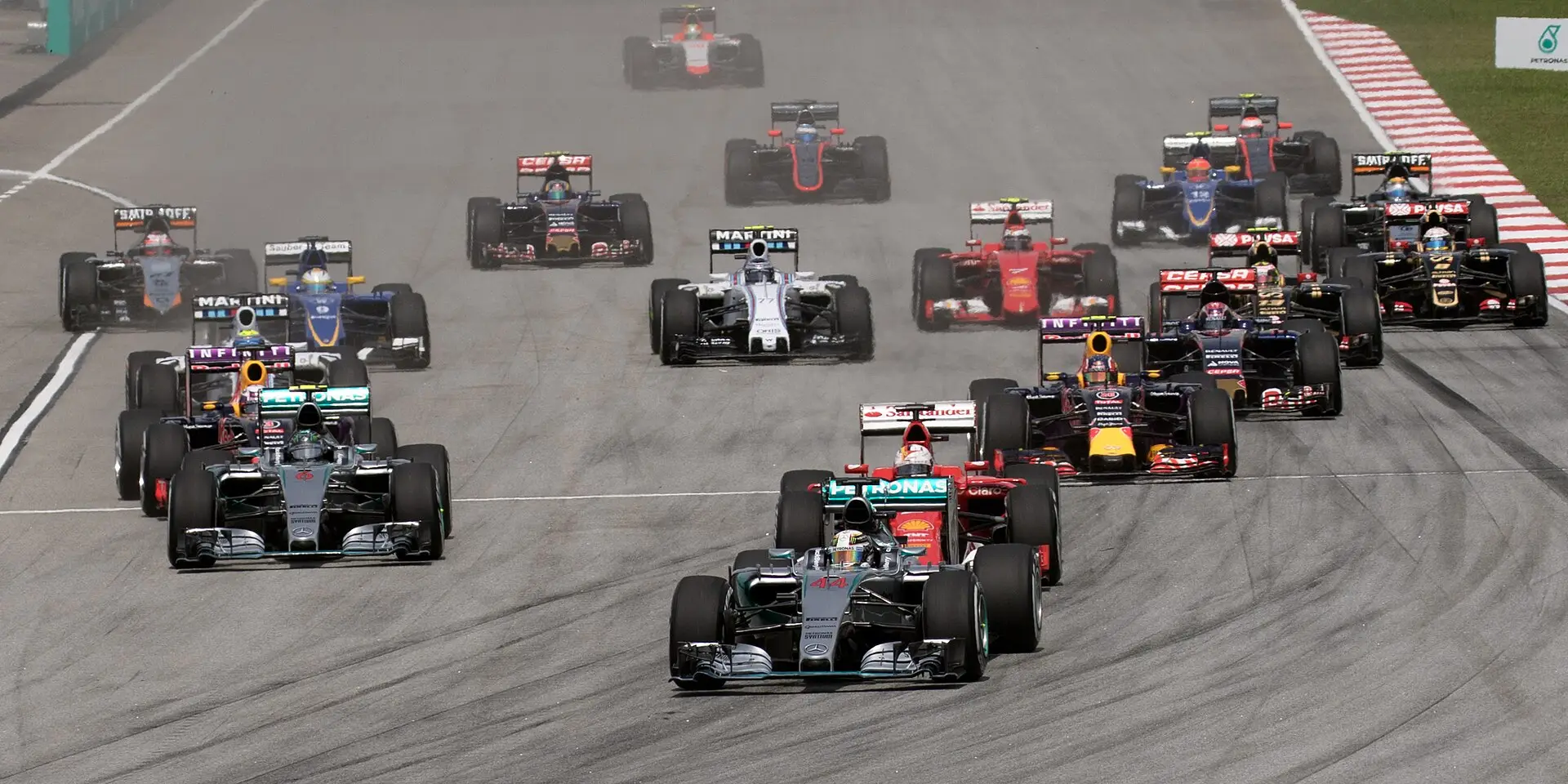
Eighteen Grands Prix between 1999 and 2017, and barely a quiet one among them. Sepang’s combination of two enormous straights, the widest asphalt on the calendar and a monsoon that can arrive in under sixty seconds produced a strike rate of chaos that few circuits have matched.
With Formula 1 returning on 2–4 October 2026, here are the seven races worth knowing before you take your seat — because at some point over that weekend, somebody in the row behind you will bring one of them up.
1999 — Ferrari win, get disqualified, and win again
The circuit’s very first Grand Prix set a tone it never really abandoned.
Michael Schumacher, back from a broken leg, returned as a support act to Eddie Irvine’s title bid, handed him the lead and helped him to victory. Then scrutineering found a technical irregularity on the Ferraris’ bodywork, and both cars were disqualified — which would have handed the championship lead, and very nearly the title, to Mika Häkkinen.
Ferrari appealed. The exclusion was overturned. Irvine got his win back, and the championship went to the final round in Suzuka.
There’s a footnote that only became visible later: that reinstated victory was the last Grand Prix win of Eddie Irvine’s career.
2001 — the pit stop that lost the race, and the tyre call that won it
The version most people remember is “both Ferraris spun and won anyway”. The reality is better, and stranger.
On lap 3, rain arrived on top of oil that Olivier Panis’s BAR had laid down. Both Ferraris slid off into the gravel — not a spin, a genuine excursion — and rejoined third and seventh. Recoverable.
What actually wrecked their afternoon was the pit lane. Under the safety car, a miscommunication left Michael Schumacher queueing behind his own team-mate for over a minute. Ferrari’s cars emerged tenth and eleventh, with the race apparently gone.
Then came the gamble: intermediate tyres, on a track still visibly wet, before anybody else was ready to commit. It came good. Both cars carved back through the field, and Ferrari finished one-two. It is still cited as one of the great strategic recoveries in the sport’s modern era.
2009 — the race that was stopped by darkness
Sepang’s most infamous afternoon. A monsoon arrived, drivers were aquaplaning on a circuit turning into a river, and Lewis Hamilton later described the conditions as the most dangerous he had raced in.
The red flag came out on lap 33. And then the sun went down behind the storm, and the race simply never restarted.
2012 — the day a Sauber almost won a Grand Prix
Heavy rain suspended the race on lap 9 for roughly fifty minutes. When it restarted behind the safety car, the order was scrambled — and out of the confusion came Sergio Pérez in a Sauber, hunting down Fernando Alonso’s Ferrari.
He wasn’t hanging on. He was reeling Alonso in, lap after lap, on a circuit still drying. And then on lap 50 he took too much kerb at Turn 14, ran wide, and lost five seconds that he was never getting back.
Alonso won. Pérez took his first Formula 1 podium and Sauber’s best result as an independent team. The paddock spent the rest of the weekend debating whether a driver on Ferrari’s radar had really been told to hold station — Sauber denied it — and Pérez was in a McLaren the following year.
2013 — Multi 21
Red Bull ran one-two, the drivers were told to hold position and bring the cars home, and Sebastian Vettel ignored the instruction, went around the outside of Mark Webber at Turn 4 with thirteen laps to go, and took the win.
The code phrase — “Multi 21”, meaning car 2 finishes ahead of car 1 — became one of the most quoted three words in modern Formula 1. Vettel apologised on the podium, then later rather unapologised. Webber, visibly done with it, left Formula 1 at the end of that season.
The same race produced a second team-order flashpoint on the Mercedes pit wall, where Nico Rosberg was refused permission to attack Lewis Hamilton for third and had to sit behind him to the flag.
Two teams, one afternoon, two civil wars. Sepang.
2016 — the engine that broke a championship
Lewis Hamilton was leading by roughly twenty seconds and driving a comfortable race towards a win he badly needed in a tightening title fight with Nico Rosberg.
On lap 41 the Mercedes engine let go in a plume of smoke, and Hamilton’s radio message became one of the decade’s most replayed.
Daniel Ricciardo inherited the lead and won ahead of Max Verstappen for a Red Bull one-two. Rosberg, who had been spun at Turn 1 by Sebastian Vettel on the opening lap — Vettel retiring instantly with broken suspension — recovered to third despite a ten-second penalty. Hamilton lost 25 points he never got back that season.
2017 — a farewell that had absolutely everything
Nobody scripts a goodbye this well.
Max Verstappen won it. He had turned 20 the previous day, on qualifying Saturday, then dived past pole-sitter Lewis Hamilton into Turn 1 on lap four and drove away to a twelve-second victory. It was only the second win of his career.
Ferrari, meanwhile, had a weekend that reads like a curse:
- Kimi Räikkönen qualified second and never started — his power unit failed on the way to the grid
- Sebastian Vettel’s engine had failed in practice, so he started from the very back, carved through the field to fourth, and on lap 41 set a 1:34.080 that still stands as the Formula 1 race lap record at Sepang
- On the cool-down lap, Vettel then collided with Lance Stroll, lost a wheel, and got back to the paddock riding on the sidepod of Pascal Wehrlein’s Sauber
Elsewhere on the same weekend, Pierre Gasly made his Formula 1 debut, Charles Leclerc drove first practice, and a dislodged drain cover destroyed Romain Grosjean’s Haas.
Formula 1’s last act in Malaysia was a four-time world champion hitching a lift home on a rival’s bodywork. Nine years later, it’s back.
The numbers behind the eighteen races
| Most wins | Sebastian Vettel — 4 (2010, 2011, 2013, 2015) |
| Most wins, constructor | Ferrari — 7 |
| Most laps led | Fernando Alonso — 169, more than anyone |
| Race lap record | 1:34.080 — Vettel, Ferrari SF70H, 2017 |
| Races shortened by weather | 2009 (stopped, half points), 2012 (suspended 50 minutes) |
| F1 era | 1999–2017, and again in 2026 |
Alonso’s line in that table is the quiet one. He never led the win count, but he led more laps at Sepang than any driver, took his first Formula 1 pole and first podium here in 2003, and won at this circuit with three different teams — Renault, McLaren and Ferrari.
Race details checked 30 July 2026 against Formula 1 and contemporary race reports.
Frequently asked questions
What is the most famous race in Sepang history?
The 2013 Malaysian Grand Prix is the one people still argue about — Sebastian Vettel ignored a Red Bull order to hold position behind Mark Webber, passed him with thirteen laps to go, and won. It became known as "Multi 21" and effectively ended Webber's Formula 1 career.
Has a Formula 1 race at Sepang ever been stopped?
Yes. The 2009 Malaysian Grand Prix was red-flagged on lap 33 during a monsoon and never restarted, because the light faded behind the storm. The result was counted back to lap 31 and half championship points were awarded — only the fifth time that had happened in F1 history.
Who won the last Malaysian Grand Prix?
Max Verstappen won the final Malaysian Grand Prix on 1 October 2017, the day after his twentieth birthday, passing pole-sitter Lewis Hamilton into Turn 1 on lap four and winning by around twelve seconds.
Why is Sepang so good for racing?
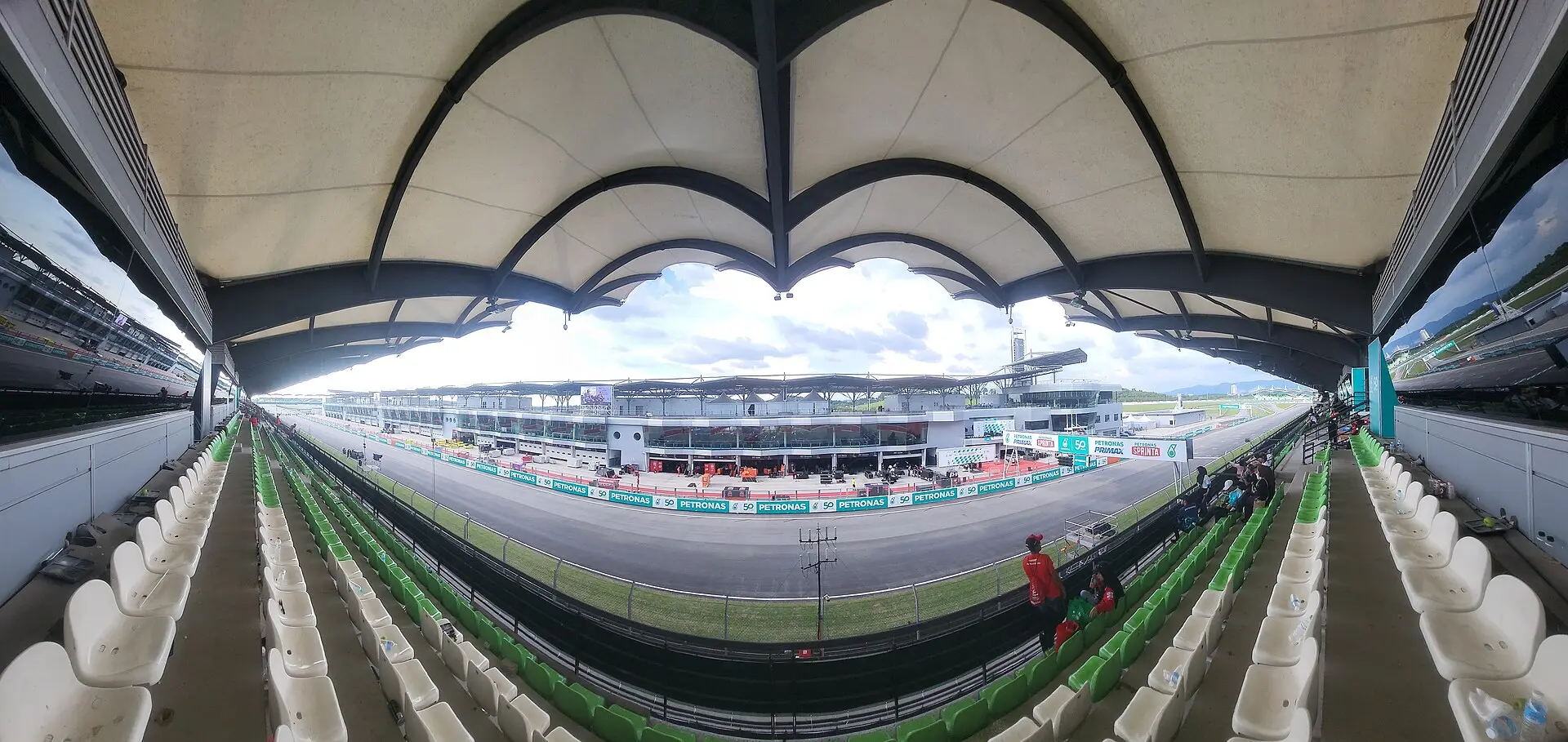
Two very long straights running in opposite directions, joined by a tight hairpin, mean a driver who loses a position immediately gets another braking zone to attack into. Add the widest track surface on the F1 calendar and frequent monsoon rain, and overtaking chances arrive constantly.